
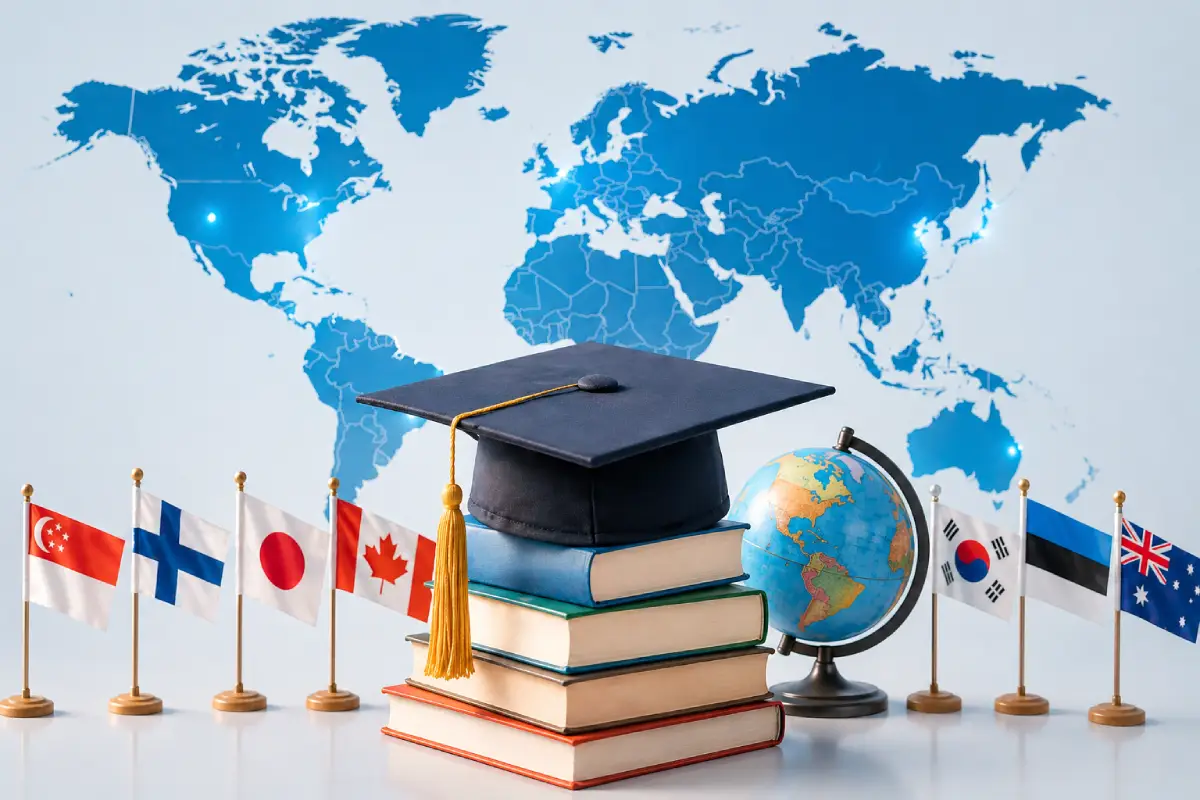
Top Education Systems by Country: A Data-Driven Guide for Parents
In recent years, one of the most important questions in education has been identifying which countries have the top education systems and what makes them successful.
Today, this question is no longer based on opinion, but on international data such as the PISA assessments conducted by the OECD. These assessments evaluate 15-year-old students in reading, mathematics, and science.
Analysis of data from the past five years reveals clear patterns among top education systems worldwide.
Leading Countries in Top Education Systems
Countries such as Singapore, Japan, and South Korea continue to dominate rankings.
Singapore, in particular, has ranked at the top across all major domains in recent assessments. Its success is built on:
- Strong problem-solving focus
- Structured curriculum
- High expectations
This makes it one of the strongest examples of top education systems.
European Systems: Balance and Well-Being
Countries like Finland and Estonia follow a different model, emphasizing:
- Deep learning
- Lower academic pressure
- Student well-being
Although there has been a slight decline in performance in recent years, these countries remain among the top education systems.
Canada: Equity and Stability
Canada is recognized for combining quality with equity. Its strengths include:
- Inclusive education
- Support for diverse student populations
- Balanced learning environments
Despite minor declines in some indicators, Canada remains a key example of top education systems.
Key Trends Over the Past Five Years
Recent data highlights several important trends in top education systems.
First, Asian countries continue to lead in mathematics and science due to strong structure and consistent practice.
Second, European systems are increasingly focusing on balancing academic success with mental well-being.
Third, many countries have experienced a decline in performance, particularly after the pandemic, showing how external factors influence learning outcomes.
What Makes Top Education Systems Successful?
Despite differences, successful systems share common characteristics:
- Focus on real skills rather than memorization
- High-quality teacher training
- Balance between expectations and support
- Attention to student well-being
These elements define the most effective top education systems.
What Can Parents Learn?
- Encourage deep understanding
- Promote problem-solving
- Create a calm learning environment
- Support emotional well-being
- Maintain balance between effort and rest
Conclusion
Global data shows that there is no single perfect model, but all top education systems share a common foundation: balance between skills, practice, and well-being.
Countries like Singapore, Finland, and Canada demonstrate that different approaches can lead to success.
For parents, the key takeaway is to create an environment where children not only study more but learn more effectively and meaningfully.
Sources