
Is Your Child’s Persian Language Changing Over Time?
A Study on Phonetic Changes in Persian–English Bilinguals
Many Iranian parents living abroad believe that if their child can speak Persian, their heritage language is being preserved. However, research on Persian language maintenance suggests that maintaining a language involves much more than everyday communication. A study of Persian–English bilinguals living in Canada found that even when Persian is actively spoken, some of its phonetic features may gradually change over time.
What Did the Study Examine?
This research focused on the phonetic features of Persian, which refer to the way speech sounds are produced and distinguished. Although these sound differences often go unnoticed in daily conversations, they play a fundamental role in preserving the structure and authenticity of a language.
By examining Persian–English bilingual speakers across different generations, researchers explored how living in an English-speaking environment influences Persian pronunciation.
Key Findings
The study found that among second- and third-generation immigrants, certain phonetic distinctions in Persian become less noticeable over time. For example, differences in sound length and consonant production may gradually weaken.
Importantly, this does not mean that Persian disappears. Instead, it shows that the pronunciation of Persian adapts to the dominant language environment, especially when English is used more frequently than Persian.
Understanding Language Attrition
Linguists describe this process as language attrition-the gradual change of a language caused by long-term exposure to another language.
Language attrition is a natural process observed in many bilingual communities around the world. These changes are often subtle and may not be immediately recognized by speakers or their families.
What Causes These Changes?
According to the study, several factors contribute to changes in Persian pronunciation, including:
- Frequency of speaking Persian at home
- Daily exposure to English
- School and social environments
- Opportunities to actively use Persian
The less frequently Persian is used in everyday life, the more likely gradual phonetic changes become.
Why Is Persian Language Maintenance Important?
Maintaining a heritage language is about more than simply being able to speak it. Accurate pronunciation, rich vocabulary, and awareness of the language’s sound system are all essential parts of preserving linguistic and cultural identity.
For bilingual children, continued exposure to Persian can strengthen communication with family members while helping preserve an important connection to their cultural heritage.
Supporting Persian in Bilingual Children
Researchers suggest that consistent exposure to Persian may help maintain its phonetic features across generations. Parents can support Persian language maintenance by:
- Speaking Persian regularly at home
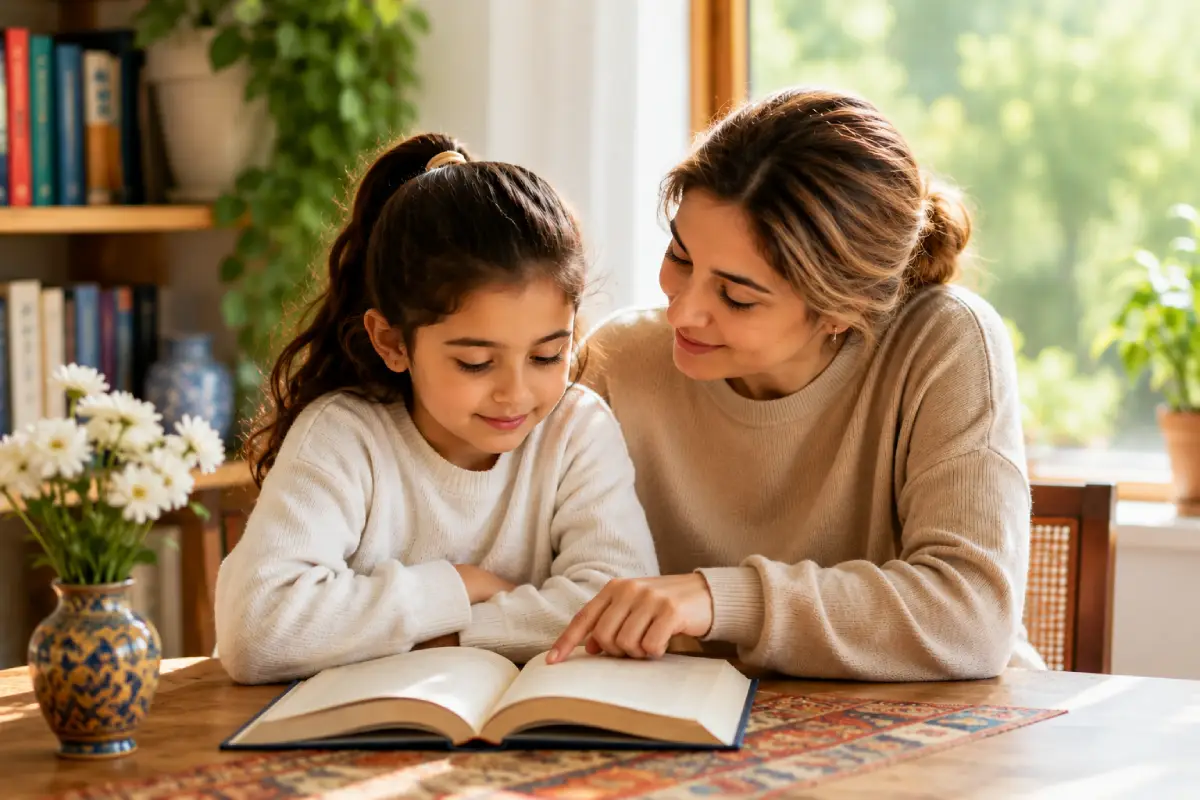
- Reading Persian books together
- Encouraging storytelling and conversations in Persian
- Providing opportunities to interact with other Persian-speaking children
- Enrolling children in Persian language classes when possible
Conclusion
This study demonstrates that a heritage language can gradually change in immigrant communities, even when it continues to be spoken. While these changes are a natural part of bilingual development, regular and meaningful use of Persian can help preserve its pronunciation and linguistic features for future generations.
Reference
Alam, F. (2017). A Study on Phonetic Changes in Persian–English Bilinguals.