
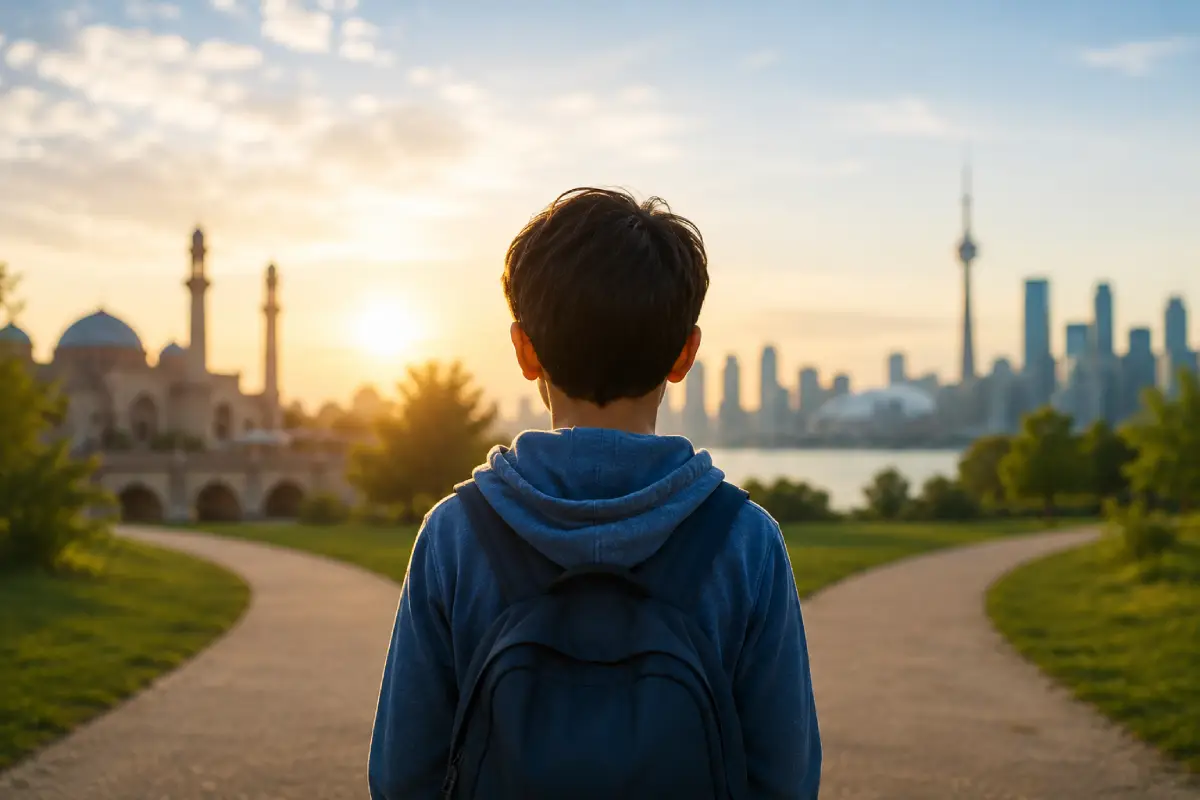
Why Iranian Kids Abroad Become Third Culture kid?
Identity, Belonging, and Growing Up Between Two Cultures
✍️ Source: Recent research on Third Culture Kids (TCKs), cultural identity, and immigrant children (2025)
If you ask an Iranian child growing up in Canada, the United States, or Europe, “Where are you from?”, the answer may not be as simple as it seems.
At home, they may speak Persian, celebrate Nowruz, and grow up surrounded by Iranian traditions and values. At school, however, they learn in English, interact with classmates from diverse backgrounds, and become immersed in the culture of their host country.
As a result, many immigrant children do not feel completely connected to only one culture. Instead, they grow up navigating multiple cultural worlds at the same time.
Researchers refer to these children as Third Culture Kids (TCKs)-young people who spend a significant part of their developmental years outside their parents’ culture and develop a unique identity influenced by multiple cultural environments.
Today, millions of children worldwide fit this description, including many Iranian children growing up abroad.
What Is a Third Culture Kid (TCK)?
The term Third Culture Kids was first introduced to describe children who grow up between cultures.
These children are influenced by:
- Their family’s culture and traditions
- The culture of the country where they live
- A unique “third culture” created by combining elements of both
For Iranian families living abroad, this often means children are simultaneously influenced by Iranian values at home and the social norms of countries such as Canada, the United States, Australia, or the United Kingdom.
Over time, these experiences shape a cultural identity that is distinct from both their parents and their local peers.
Why do Third Culture Children (TCK) need more support and understanding?
Recent studies on cultural identity and immigrant children suggest that a strong sense of belonging plays an important role in emotional well-being, self-confidence, and social adjustment.
Children who feel pressured to choose between cultures may experience confusion or internal conflict. In contrast, children who learn to embrace multiple cultural influences often develop a healthier and more flexible sense of identity.
Understanding the Third Culture Kid experience can help parents better support their children as they navigate life between different cultural worlds.
The Advantages of Growing Up Between Cultures
Although the TCK experience comes with challenges, it also offers many valuable benefits.
A Broader Global Perspective
Third Culture Kids are often exposed to diverse viewpoints from an early age.
They learn that people can think differently, communicate differently, and approach life from different cultural perspectives. This exposure often encourages open-mindedness and curiosity about the world.
Strong Cross-Cultural Communication Skills
Many third culture kids (TCKs) become skilled at interacting with people from different backgrounds.
Because they regularly navigate multiple cultural environments, they often develop empathy, adaptability, and strong interpersonal skills.
Greater Adaptability
Growing up in multicultural environments teaches children how to adjust to new situations and unfamiliar settings.
In an increasingly globalized world, adaptability has become one of the most valuable life skills a child can develop.
Common Challenges Faced by Third Culture Kids
While there are many advantages, the Third Culture Kid experience can also present unique challenges.
Feeling Caught Between Cultures
One of the most common experiences reported by TCKs is a feeling of not fully belonging anywhere.
In Iran, they may be viewed as “too Canadian” or “too Western.” In Canada or another host country, they may feel different because of their language, traditions, or family background.
This can sometimes create uncertainty about identity and belonging.
Losing Connection with the Heritage Language
For many immigrant families, maintaining the Persian language becomes a major concern.
Language is more than a communication tool-it is closely tied to culture, family relationships, and personal identity.
When children gradually stop using Persian, they may also lose access to stories, traditions, and deeper connections with extended family members.
For this reason, educators and researchers increasingly emphasize the importance of heritage language maintenance alongside learning the dominant language of the host country.
Different Experiences from Their Parents
Parents and children often experience migration differently.
While parents may have spent much of their lives in Iran, their children are growing up in a completely different environment.
Recognizing this difference can help families develop more realistic expectations and stronger communication.
How Can Parents Support Third Culture Kids?
Experts suggest several practical strategies for helping children thrive between cultures.
Encourage Open Conversations About Identity
Children benefit from opportunities to discuss their experiences, questions, and feelings about culture and belonging.
Creating a safe space for these conversations can strengthen self-confidence and emotional well-being.
Maintain the Persian Language
Speaking Persian at home, reading Persian books, storytelling, and participating in Persian language classes can help children maintain an important connection to their heritage.
The goal is not only language learning but also cultural continuity.
Celebrate Both Cultures
Children should never feel that they must choose between being Iranian and being Canadian, American, or Australian.
Instead, they can learn to appreciate the strengths of both cultures and build a richer, more inclusive identity.
Build Connections with Other Iranian Families
Relationships with peers who share similar cultural experiences can help children feel understood and supported.
These connections often reinforce both language development and cultural confidence.
Final Thoughts
Many Iranian children growing up abroad are, in fact, Third Culture Kids.
They live between cultures, languages, and traditions, creating identities that are uniquely their own.
Although this journey may sometimes bring questions about belonging, it also provides opportunities to develop adaptability, cultural awareness, and a global perspective.
Perhaps the most important message for parents is this: children do not have to choose one culture over another. With the right support, they can embrace both and build a strong, confident identity that reflects the richness of their experiences.
To better understand the experiences of Iranian children living abroad and the challenges of identity formation, it is important to explore the concept of “Third Culture Kids.” It highlights how moving between cultures can influence children’s sense of belonging and personal development. To learn more about strengthening cultural identity and supporting children’s growth, you can also read our article on the Power of Storytelling.
Reference