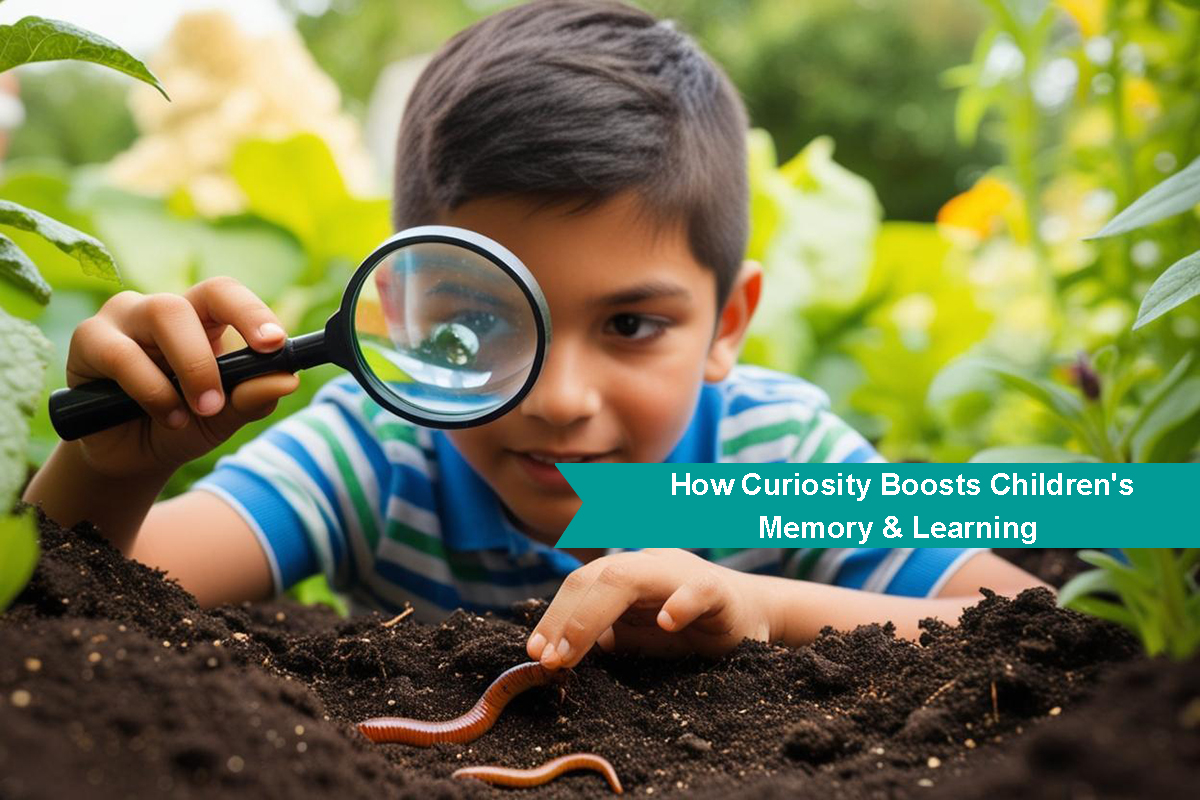
🔍 How Curiosity Boosts Children’s Memory & Learning
📅 Published: February 23, 2025
✍️ Source: Journal of Experimental Child Psychology
💡 Key Takeaway:
A recent study published in the Journal of Experimental Child Psychology highlights that children who exhibit high curiosity retain information better and are more likely to explore related topics. The research underscores the role of curiosity in enhancing memory and fostering deeper engagement in learning.
🏃 Why It Matters:
- Encouraging curiosity can significantly improve children’s ability to retain and recall information.
- Active exploration driven by curiosity leads to stronger cognitive development.
- Inquiry-based learning strategies can make education more engaging and effective for children.
- Fostering curiosity prepares children for lifelong learning and adaptability in a rapidly changing world.
🔬 Science Behind the Study:
Researchers tested 32 children aged 10 to 12 using a trivia-based memory task. The results showed that children who exhibited high curiosity about specific trivia facts retained them significantly better than those with lower curiosity levels. Moreover, these curious children displayed a greater inclination to explore related topics, reinforcing the notion that curiosity is a fundamental driver of both memory and intellectual growth.
The study also examined how curiosity influences brain activity, showing that when children are curious, their brains become more receptive to absorbing new information. This aligns with existing research on neuroplasticity, which highlights how active engagement with learning materials strengthens neural connections.
📚 Curiosity and the Learning Process
Curiosity acts as a natural motivator, driving children to seek answers, engage with new information, and develop critical thinking skills. When children are encouraged to ask questions, explore different solutions, and make discoveries on their own, they are more likely to develop a deep and lasting understanding of concepts.
Teachers and parents play a crucial role in nurturing curiosity by fostering an environment where children feel safe to ask questions and express their thoughts. Inquiry-based learning, where students are encouraged to investigate topics through experiments and discussions, can significantly enhance retention and comprehension.
🎯 SEO-Optimized Practical Tips for Parents & Educators ✔️ Foster Question-Asking: Encourage children to ask questions and seek answers through exploration.
✔️ Use Interactive Learning: Incorporate games, storytelling, and hands-on activities to stimulate curiosity.
✔️ Create an Inquiry-Based Environment: Provide open-ended learning experiences that invite discovery.
✔️ Encourage Independent Research: Support children in investigating topics that spark their interest.
✔️ Make Learning Fun: Engage children in real-world problem-solving activities to sustain their curiosity.
✔️ Expose Children to New Experiences: Visits to museums, nature parks, and cultural events can inspire curiosity and expand their knowledge base.
📖 Read the full study: Journal of Experimental Child Psychology